Determination of the irrigation regime for the corn (Zea mays L.) in Cienfuegos province
Article Sidebar
Main Article Content
Abstract
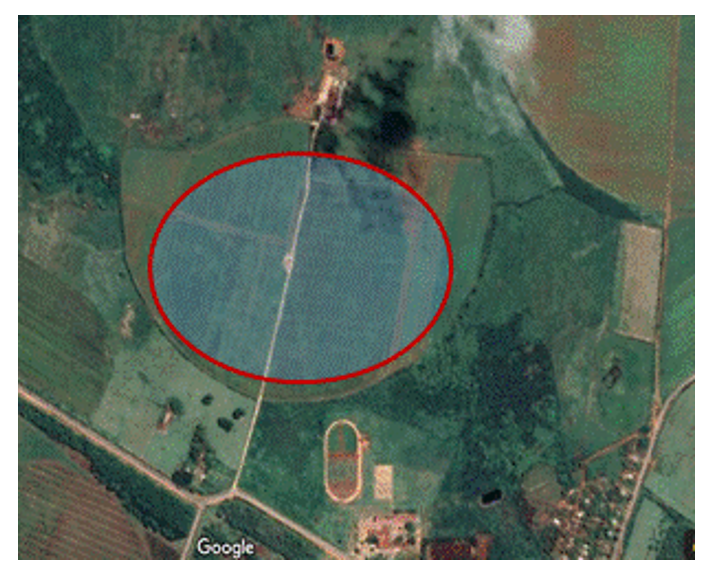
The knowledge of the water requirements of a crop allows us to infer the possibilities of its development and makes it possible to evaluate the amount of water that is not satisfied by precipitation to be covered by irrigation. With the objective of determining the exploitation irrigation regime for the cultivation of corn, variety H-Ame 15, on the “La Prosperidad” farm of the Horquita Agricultural Company, this work was developed in the period included in the sowing campaign of spring. The planting frame was 0,90 m by 0,25 m. The area is benefited by the central pivot machine No 2, Western model, with 5 towers and covers an area of 30,7 ha. The IV quadrant of the machine was taken in which 5 plots of 60 m2 were established, one in each section of the machine, for sampling. The soil, crop, climate and machine parameters were determined, with which the time and irrigation standard required for each phase of crop development was established based on the moisture balance with the CROPWAT 8.0 program. The main results were that the corn variety H-Ame 15 found ideal soil, climate and irrigation conditions to express its maximum potential yield. Irrigation management allowed increasing the use of rain and reducing the volume of water applied by irrigation up to 48,5% of that consumed by the crop. The average yield of corn planted in spring with 13% grain moisture was 10,3 t ha-1 with a standard deviation of 0,5 and a coefficient of variation of 4,86%.
Article Details

This work is licensed under a Creative Commons Attribution-NonCommercial 4.0 International License.
Aquellos autores/as que tengan publicaciones con esta revista, aceptan los términos siguientes:
- Los autores/as conservarán sus derechos de autor y garantizarán a la revista el derecho de primera publicación de su obra, el cuál estará simultáneamente sujeto a la Licencia de reconocimiento-no comercial de Creative Commons 4.0 que permite a terceros compartir la obra siempre que se indique su autor y su primera publicación esta revista. Bajo esta licencia el autor será libre de:
- Compartir — copiar y redistribuir el material en cualquier medio o formato
- Adaptar — remezclar, transformar y crear a partir del material
- El licenciador no puede revocar estas libertades mientras cumpla con los términos de la licencia
Bajo las siguientes condiciones:
- Reconocimiento — Debe reconocer adecuadamente la autoría, proporcionar un enlace a la licencia e indicar si se han realizado cambios. Puede hacerlo de cualquier manera razonable, pero no de una manera que sugiera que tiene el apoyo del licenciador o lo recibe por el uso que hace.
- NoComercial — No puede utilizar el material para una finalidad comercial.
- No hay restricciones adicionales — No puede aplicar términos legales o medidas tecnológicas que legalmente restrinjan realizar aquello que la licencia permite.
- Los autores/as podrán adoptar otros acuerdos de licencia no exclusiva de distribución de la versión de la obra publicada (p. ej.: depositarla en un archivo telemático institucional o publicarla en un volumen monográfico) siempre que se indique la publicación inicial en esta revista.
- Se permite y recomienda a los autores/as difundir su obra a través de Internet (p. ej.: en archivos telemáticos institucionales o en su página web) antes y durante el proceso de envío, lo cual puede producir intercambios interesantes y aumentar las citas de la obra publicada. (Véase El efecto del acceso abierto).
References
Becerra, F. E. J., García, Q. E., García, V. J., & Pérez, A. R. (2023). Producción de maíz (Zea mays L) H-Ame15 en la Empresa Agropecuaria de Horquita, Abreu-Cienfuegos. Universidad y Sociedad, 15(S2), 59-69.
Blanco, V. Y., Cartaya, R. O. E., & Espina, N. M. (2022). Efecto de diferentes formas de aplicación del Quitomax® en el crecimiento del maíz. Agronomía Mesoamericana, 47246-47246, ISSN: 2215-3608.
Chen, Y., Marek, G. W., Marek, T. H., Gowda, P. H., Xue, Q., Moorhead, J. E., Brauer, D. K., Srinivasan, R., & Heflin, K. R. (2019). Multisite evaluation of an improved SWAT irrigation scheduling algorithm for corn (Zea mays L.) production in the US Southern Great Plains. Environmental modelling & software, 118, 23-34,ISSN:1364-8152, Publisher: Elsevier. https://doi.org/10.1016/
Cid, G., López, T., González, F., Herrera, J., & Ruiz, M. E. (2012). Características físicas que definen el comportamiento hidráulico de algunos suelos de Cuba. Revista Ingeniería Agrícola, 2(2), 25-31.
Cisneros, R. (2003). Apuntes de la materia de Riego y Drenaje (p. 164). Universidad Autónoma De San Luis Potosí Centro de Investigación y Estudios de Postgrado de la Facultad de Ingeniería, San Luís, Potosí, Bolivia.
Duarte, D. C. (2015). Nuevas normas netas de riego para los cultivos agrícolas en Cuba. Ingeniería Agrícola, 5(4), 46-51, 2227-8761.
Gallardo, B. Y., Brown, M. O., & Álvarez, T. M. (2018). Análisis de los impactos provocados por la sequía agrícola en los cultivos de maíz y frijol en áreas agrícolas del municipio Venezuela, Ciego de Ávila, Cuba. Sociedade & Natureza, 30(2), 96-115, ISSN: 1982-4513, Publisher: SciELO Brasil. http://dx.doi.org/10.14393
Hernández, J., Pérez, J., Bosch, I., & Castro, S. (2015). Clasificación de los suelos de Cuba 2015. Mayabeque, Cuba: Ediciones INCA, 93.
León, V. Y. J., Ojeda, Q. L. J., Martínez, A. A., & Bernal, C. Y. (2023). Propiedades físicas y componentes de la fertilidad del suelo en la Finca Maripa, Cumanayagua, Cienfuegos. Revista Científica Agroecosistemas, 11(2), 141-149, ISSN: 2415-2862.
López, R., & Gil, V. (2011). Generalidades del Cultivo del Maíz. Editorial Feijoo, Santa Clara, Villa Clara, Cuba: http://feijoo. cdict. uclv. edu. cu/wpcontent/uploads/2018/05/Generalidades-del-cultivo-del-Ma% C3% ADz-Ram% C3% B3n-L% C3% B3pez-Fleites. pdf
ONEI-Cuba. (2023). Anuario Estadístico de Cuba 2022. [Anuario estadístico]. Oficina Nacional de Estadísticas e Informática, La Habana, Cuba. http://www.one.cu/aed22/
Rosegrant, M. W., Msangi, S., Ringler, C., Sulser, T. B., Zhu, T., & Cline, S. A. (2008). International model for policy analysis of agricultural commodities and trade (IMPACT): Model description. International Food Policy Research Institute Washington, DC. http://bit.ly/2rDE9EF
Sáez, C. A., Morales, G. D., Gordon, M. R., Jaén, V. J., Franco, B. J., & Ramos, M. F. (2024). Sensibilidad del cultivo de maíz (Zea mays L.) a diferentes períodos de déficit hídrico controlado. Agronomía Mesoamericana, 35(1), ISSN: 1659-1321, Publisher: https://creativecommons. org/licenses/by-nc-nd/4.0/.
Schindelbeck, R. R., van Es, H. M., Salgado, G. S., Wolfe, D., Whitlow, T. L., Gugino, B. K., Idowu, O. J., & Moebius, C. B. N. (2008). Comprehensive assessment of soil quality for landscape and urban management. Landscape and Urban Planning, 88(2-4), 73-80, ISSN: 0169-2046, Publisher: Elsevier.
Sifuentes, I. E., Ojeda, B. W., Macías, C. J., Mendoza, P. C., & Preciado, R. P. (2021). Déficit hídrico en maíz al considerar fenología, efecto en rendimiento y eficiencia en el uso del agua. Agrociencia, 55(3), 209-226, ISSN: 1405-3195.
Tarjuelo, M. B. J. M. (2005). El riego por aspersión y su tecnología, Editorial Mundi-Prensa. Tercera edición, Madrid, España.
Téllez, R. P., Morán, B. I., Riverón, H. A., Espinoza, D. D., Hernández, H. D., Martínez, R. A., Ayra, P. C., & Isidrón, P. M. (2021). H-Ame15: Nuevo híbrido simple de maíz transgénico, resistente a la palomilla y tolerante a herbicidas. Cultivos Tropicales, 42(4), 1-3, ISSN: 1819-4087, Publisher: Instituto Nacional de Ciencias Agrícolas.
Zamora, S. S., Ruiz, E. F. H., Beltrán-Morales, M. F. A., Fenech, L. L., Murillo, A. B., & Troyo, D. E. (2011). Régimen hídrico del maíz en una zona árida, determinado en porcentajes de evaporación. Tropical and Subtropical Agroecosystems, 13(2), 181-186, ISSN: 1870-0462, Publisher: Universidad Autónoma de Yucatán.