De la fertilización al uso de biofertilizantes con mirada ecológica, un cambio de paradigma necesario
Barra lateral del artículo
Contenido principal del artículo
Resumen
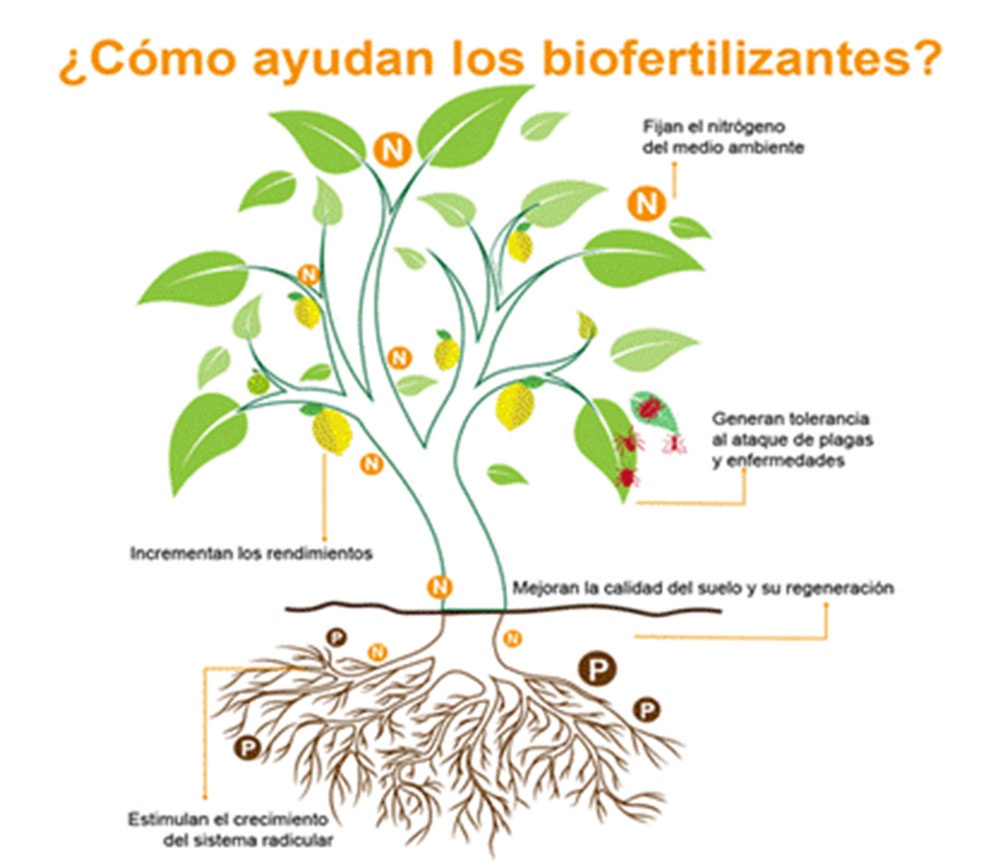
La transición desde los fertilizantes químicos hacia los biofertilizantes, como parte de un manejo integrado de la nutrición vegetal, exige un cambio de paradigma en la agricultura. La Revolución Verde impulsó un enfoque industrializado de la fertilización, centrado en el rendimiento, pero con graves impactos ambientales: contaminación, degradación del suelo y pérdida de biodiversidad. Frente a esto, surge el manejo integrado de nutrientes, que combina fertilizantes minerales, orgánicos y biofertilizantes para optimizar la eficiencia y minimizar daños ecológicos. Los biofertilizantes, formulados con microorganismos beneficiosos, mejoran la absorción de nutrientes, protegen los cultivos y fortalecen la salud del suelo. En Cuba, su adopción -ejemplificada con productos como BIOFER®, AZOFERT® y FOSFORINA®- ha reducido la dependencia de insumos externos. No obstante, estos no sustituyen por completo a los fertilizantes minerales, sino que los complementan, especialmente en sistemas agroecológicos. Para una transición exitosa, es clave entender el suelo como un sistema vivo, considerar ciclos de nutrientes e interacciones microbianas, e integrar conocimientos técnicos y locales. Además, se requiere evaluar rigurosamente los biofertilizantes en diversos contextos, asegurando así sistemas agrícolas sostenibles y resilientes.
Detalles del artículo

Esta obra está bajo una licencia internacional Creative Commons Atribución-NoComercial 4.0.
Aquellos autores/as que tengan publicaciones con esta revista, aceptan los términos siguientes:
- Los autores/as conservarán sus derechos de autor y garantizarán a la revista el derecho de primera publicación de su obra, el cuál estará simultáneamente sujeto a la Licencia de reconocimiento-no comercial de Creative Commons 4.0 que permite a terceros compartir la obra siempre que se indique su autor y su primera publicación esta revista. Bajo esta licencia el autor será libre de:
- Compartir — copiar y redistribuir el material en cualquier medio o formato
- Adaptar — remezclar, transformar y crear a partir del material
- El licenciador no puede revocar estas libertades mientras cumpla con los términos de la licencia
Bajo las siguientes condiciones:
- Reconocimiento — Debe reconocer adecuadamente la autoría, proporcionar un enlace a la licencia e indicar si se han realizado cambios. Puede hacerlo de cualquier manera razonable, pero no de una manera que sugiera que tiene el apoyo del licenciador o lo recibe por el uso que hace.
- NoComercial — No puede utilizar el material para una finalidad comercial.
- No hay restricciones adicionales — No puede aplicar términos legales o medidas tecnológicas que legalmente restrinjan realizar aquello que la licencia permite.
- Los autores/as podrán adoptar otros acuerdos de licencia no exclusiva de distribución de la versión de la obra publicada (p. ej.: depositarla en un archivo telemático institucional o publicarla en un volumen monográfico) siempre que se indique la publicación inicial en esta revista.
- Se permite y recomienda a los autores/as difundir su obra a través de Internet (p. ej.: en archivos telemáticos institucionales o en su página web) antes y durante el proceso de envío, lo cual puede producir intercambios interesantes y aumentar las citas de la obra publicada. (Véase El efecto del acceso abierto).
Citas
Aktar, M. W., Sengupta, D., & Chowdhury, A. (2009). Impact of pesticides use in agriculture: Their benefits and hazards. Interdisciplinary Toxicology, 2(1), 1-12.
Altieri, M. A. (1991). How best can we use biodiversity in agroecosystems? Outlook on Agriculture, 20(1), 15-23. https://doi.org/10.1177/003072709102000105
Altieri, M. A., & Nicholls, C. I. (2007). Conversión agroecológica de sistemas convencionales de producción: Teoría, estrategias y evaluación. Ecosistemas, 16(1), 89-99.
Ambrosini, A., de Souza, R., & Passaglia, L. M. (2016). Ecological role of bacterial inoculants and their potential impact on soil microbial diversity. Plant and Soil, 400(1), 193-207. https://doi.org/10.1007/s11104-015-2727-7
Atafar, Z., Mesdaghinia, A., Nouri, J., Homaee, M., Yunesian, M., Ahmadimoghaddam, M., & Mahvi, A. H. (2010). Effect of fertilizer application on soil heavy metal concentration. Environmental Monitoring and Assessment, 160(1), 83-89. https://doi.org/10.1007/s10661-008-0659-x
Aulakh, M. S., & Malhi, S. S. (2004). Fertilizer nitrogen use efficiency as influenced by interactions with other nutrients. In J. R. Wilson (Ed.), Agriculture and the nitrogen cycle: Assessing the impacts of fertilizer use on food production and the environment (pp. 181-192). Scientific Publishers.
Bardgett, R. D., & McAlister, E. (1999). The measurement of soil fungal: Bacterial biomass ratios as an indicator of ecosystem self-regulation in temperate meadow grasslands. Biology and Fertility of Soils, 29(3), 282-290. https://doi.org/10.1007/s003740050554
Bloemberg, G. V., Wijfjes, A. H., Lamers, G. E., Stuurman, N., & Lugtenberg, B. J. (2000). Simultaneous imaging of Pseudomonas fluorescens WCS365 populations expressing three different autofluorescent proteins in the rhizosphere: New perspectives for studying microbial communities. Molecular Plant-Microbe Interactions, 13(11), 1170-1176.
Bourguignon, C., & Bourguignon, L. (2015). Le sol, la terre et les champs: Pour retrouver une agriculture saine. Sang de la terre.
Castro-Sowinski, S., Herschkovitz, Y., Okon, Y., & Jurkevitch, E. (2007). Effects of inoculation with plant growth-promoting rhizobacteria on resident rhizosphere microorganisms. FEMS Microbiology Letters, 276(1), 1-11. https://doi.org/10.1111/j.1574-6968.2007.00878.x
Ceccon, E. (2008). La revolución verde: Tragedia en dos actos. Ciencias, 91, 4-14.
Chakraborty, T., & Akhtar, N. (2021). Biofertilizers: Prospects and challenges for future. In D. P. Singh, H. B. Singh, & Prabha, R. (Eds.), Biofertilizers: Study and impact (pp. 575-590). Wiley. https://doi.org/10.1002/9781119724995.ch20
Conway, G. R. (1987). The properties of agroecosystems. Agricultural Systems, 24(2), 95-117.
Dagognet, F. (1973). Des révolutions vertes: Histoire et principes de l’agronomie. [Editorial].
Darjee, S., Shrivastava, M., Langyan, S., Singh, G., Pandey, R., Sharma, A., Khandelwal, A., & Singh, R. (2023). Integrated nutrient management reduced the nutrient losses and increased crop yield in irrigated wheat. Archives of Agronomy and Soil Science, 69(8), 1298-1309. https://doi.org/Integrated nutrient management reduced the nutrient losses and increased crop yield in irrigated wheat
Erktan, A., Or, D., & Scheu, S. (2020). The physical structure of soil: Determinant and consequence of trophic interactions. Soil Biology and Biochemistry, 148, 107876. https://doi.org/10.1016/j.soilbio.2020.107876
Gliessman, S. R. (2000). Agroecosystem sustainability: Developing practical strategies. CRC Press.
Gliessman, S. R., Rosado-May, F. J., Guadarrama-Zugasti, C., Jedlicka, J., Cohn, A., Méndez, V. E., Cohen, R., Trujillo, L., Bacon, C., & Jaffe, R. (2007). Agroecología: Promoviendo una transición hacia la sostenibilidad. Ecosistemas, 16(1), 13-23.
Glissman, S. (2002). Agroecología: Procesos ecológicos en agricultura sustentable. CATIE.
Goenadi, D. H., Mustafa, A., & Santi, L. (2018). Bio-organo-chemical fertilizers: A new prospecting technology for improving fertilizer use efficiency (FUE). IOP Conference Series: Earth and Environmental Science, 183(1), 012011. http://doi:10.1088/1755-1315/183/1/012011
Gómez, L., Martínez-Viera, R., Funes-Aguilar, F., & Vázquez, L. (2016). Inoculantes microbianos y estimulantes. In F. Funes & L. L. Vázquez (Eds.), Avances de la Agroecología en Cuba (pp. 141-153). Estación Experimental de Pastos y Forrajes Indio Hatuey.
Javoreková, S., Maková, J., Medo, J., Kovácsová, S., Charousová, I., & Horák, J. (2015). Effect of bio-fertilizers application on microbial diversity and physiological profiling of microorganisms in arable soil. Eurasian Journal of Soil Science, 4(1), 54-61. https://doi.org/10.18393/ejss.07093
Joshi, S. K., & Gauraha, A. K. (2022). Global biofertilizer market: Emerging trends and opportunities. In D. P. Singh, H. B. Singh, & Prabha, R. (Eds.), Trends of applied microbiology for sustainable economy (pp. 689-697). [Publisher].
Kumar, G., & Baweja, P. (2024). Biofertilizer: A tool for sustainable agriculture in changing environment. Bioengineering Research, 1(1), 1-10.
Lal, R., Hall, G., & Miller, F. (1989). Soil degradation: I. Basic processes. Land Degradation & Development, 1(1), 51-69.
Likens, G. E., & Bormann, F. H. (1974). Linkages between terrestrial and aquatic ecosystems. BioScience, 24(8), 447-456. https://doi.org/10.2307/1296852
Liu, J., Shen, J., Li, Y., Su, Y., Ge, T., Jones, D. L., & Wu, J. (2014). Effects of biochar amendment on the net greenhouse gas emission and greenhouse gas intensity in a Chinese double rice cropping system. European Journal of Soil Biology, 65, 30-39.
Machín Sosa, B., Jaime, R., María, A., Lozano, Á., & Rocío, D. (2010). Revolución agroecológica el movimiento de campesino a campesino de la ANAP en Cuba. [Editorial/Source].
Mącik, M., Gryta, A., & Frąc, M. (2020). Biofertilizers in agriculture: An overview on concepts, strategies and effects on soil microorganisms. Advances in Agronomy, 162, 31-87. https://doi.org/10.1016/bs.agron.2020.02.001
Martín-López, B., González, J. A., Díaz, S., Castro, I., & García-Llorente, M. (2007). Biodiversidad y bienestar humano: El papel de la diversidad funcional. Ecosistemas, 16(3), 69-80.
Mazoyer, M., & Roudart, L. (2002). Mondialisation, crise et conditions de développement durable des agricultures paysannes. ULB--Universite Libre de Bruxelles.
Molina, J. E. (2021). La revolución verde como revolución tecnocientífica: Artificialización de las prácticas agrícolas y sus implicaciones. Revista Colombiana de Filosofía de la Ciencia, 21(42), 175-204. https://doi.org/10.18270/rcfc.v21i42.3477
Mukherjee, B., Goswami, S., Pal, P., Mandal, T. K., Bhattacharya, U., Naskar, M. K., & Dutta, S. (2023). Improving crop nutrition through ecofriendly biofertilizers: Concept, types and benefits in agriculture. [Editorial].
O’Callaghan, M., Ballard, R. A., & Wright, D. (2022). Soil microbial inoculants for sustainable agriculture: Limitations and opportunities. Soil Use and Management, 38(3), 1340-1369. https://doi.org/10.1111/sum.1281
Odum, E. P., & Barrett, G. W. (1971). Fundamentals of ecology. Saunders Philadelphia.
Odum, H. T. (1996). Scales of ecological engineering. Ecological Engineering, 6(1-3), 7-19.
Okon, Y., & Labandera-Gonzalez, C. A. (1994). Agronomic applications of Azospirillum: An evaluation of 20 years worldwide field inoculation. Soil Biology and Biochemistry, 26(12), 1591-1601.
Pimentel, D., & Pimentel, M. H. (2007). Food, energy, and society. CRC Press.
Primavesi, A. (2002). Manejo ecológico do solo: A agricultura em regiões tropicais. NBL Editora.
Rahman, K. and Zhang, D. (2018) Effects of Fertilizer Broadcasting on the Excessive Use of Inorganic Fertilizers and Environmental Sustainability. Sustainability, 10, Article 759. - References - Scientific Research Publishing https://share.google/z1kMfhmECgJTLsLhF
Rosset, P. M., Machín Sosa, B., Roque Jaime, A. M., & Ávila Lozano, D. R. (2011). The Campesino-to-Campesino agroecology movement of ANAP in Cuba: Social process methodology in the construction of sustainable peasant agriculture and food sovereignty. The Journal of Peasant Studies, 38(1), 161-191. https://doi:10.1080/03066150.2010.538584
Sanjuán, J., Nápoles, M. C., Pérez-Mendoza, D., Lorite, M. J., & Rodríguez-Navarro, D. N. (2023). Microbials for agriculture: Why do they call them biostimulants when they mean probiotics? Microorganisms, 11(1), 153. https://doi: 10.3390/microorganisms11010153
Sansinenea, E. (2021). Application of biofertilizers: Current worldwide status. Biofertilizers. https://doi.org/10.1016/B978-0-12-821667-5.00004-X.
Sarandón, S. J. (2021). Agroecología: Una revolución del pensamiento en las ciencias agrarias. Ciencia, tecnología y política. https://doi.org/10.24215/26183188e055
Srivastava, A., & Ngullie, E. (2009). Integrated nutrient management: Theory and practice. Dynamic Soil, Dynamic Plant, 3(1), 1-30.
Tivy, J. (2014). Agricultural ecology. Routledge.
Vessey, J. K. (2003). Plant growth promoting rhizobacteria as biofertilizers. Plant and Soil, 255(2), 571-586. https://doi.org/10.1023/A:1026037216893
Wardle, D., Yeates, G., Watson, R., & Nicholson, K. (1995). The detritus food-web and the diversity of soil fauna as indicators of disturbance regimes in agro-ecosystems. Plant and Soil, 170(1), 35-43. https://doi.org/10.1007/BF02183053
Yeates, G., Tate, K., & Newton, P. (1997). Response of the fauna of a grassland soil to doubling of atmospheric carbon dioxide concentration. Biology and Fertility of Soils, 25(3), 307-315. https://doi.org/10.1007/s003740050320
Youssef, M., & Eissa, M. (2014). Biofertilizers and their role in management of plant parasitic nematodes. A review. Journal of Biotechnology and Pharmaceutical Research, 5(1), 1-6.