Occurrence of Diseases in Tilapia Culture Worldwide: Review of the Current State of the Art
Article Sidebar
Main Article Content
Abstract
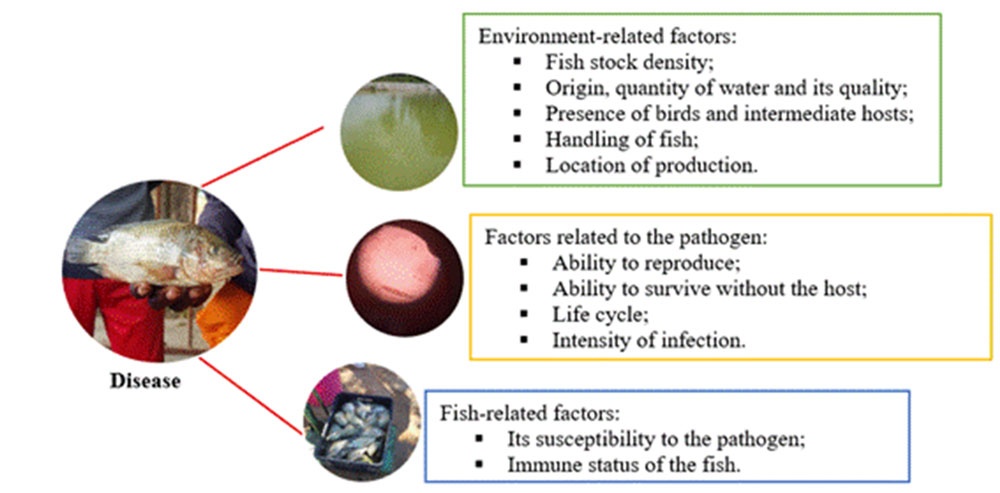
The tilapiculture has grown substantially in the last years for the productive intensification what presupposes the increase in the frequency of occurrence of diseases and the establishment of a propitious environment to the disappointment of new pathogenic outbreaks. Aiming to contribute to the qualitative production of tilapia, the guarantee of public health and the continuous growth of tilapiculture in a sustainable way controlling and preventing the occurrence of diseases in tilapiculture A rresearch was conducted on parasitic and microbial pathogens in tilapia farming in Angola. To provide an overview of the current scenario, a preparatory study was necessary to assess the present state of tilapia farming and its sanitary conditions.The article brings an appreciation of the current state of tilapiculture and its worldwide prosecution in terms of quantitative and qualitative production, geographical distribution of production, the commercially important tilapia species, the production systems applied in tilapiculture, current vision and sanitary approach in production: most frequent diseases and pathogens, the damage caused by diseases in the sector, the forms of recognition of the presence of disease in the farm adopted by producers and the route indicated until definitive diagnosis, the solutions taken in the treatment, control and prevention of cases of diseases common to tilapiculture as well as cases of new outbreaks ending with the difficulties encountered in facing the diseases.
Article Details

This work is licensed under a Creative Commons Attribution-NonCommercial 4.0 International License.
Aquellos autores/as que tengan publicaciones con esta revista, aceptan los términos siguientes:
- Los autores/as conservarán sus derechos de autor y garantizarán a la revista el derecho de primera publicación de su obra, el cuál estará simultáneamente sujeto a la Licencia de reconocimiento-no comercial de Creative Commons 4.0 que permite a terceros compartir la obra siempre que se indique su autor y su primera publicación esta revista. Bajo esta licencia el autor será libre de:
- Compartir — copiar y redistribuir el material en cualquier medio o formato
- Adaptar — remezclar, transformar y crear a partir del material
- El licenciador no puede revocar estas libertades mientras cumpla con los términos de la licencia
Bajo las siguientes condiciones:
- Reconocimiento — Debe reconocer adecuadamente la autoría, proporcionar un enlace a la licencia e indicar si se han realizado cambios. Puede hacerlo de cualquier manera razonable, pero no de una manera que sugiera que tiene el apoyo del licenciador o lo recibe por el uso que hace.
- NoComercial — No puede utilizar el material para una finalidad comercial.
- No hay restricciones adicionales — No puede aplicar términos legales o medidas tecnológicas que legalmente restrinjan realizar aquello que la licencia permite.
- Los autores/as podrán adoptar otros acuerdos de licencia no exclusiva de distribución de la versión de la obra publicada (p. ej.: depositarla en un archivo telemático institucional o publicarla en un volumen monográfico) siempre que se indique la publicación inicial en esta revista.
- Se permite y recomienda a los autores/as difundir su obra a través de Internet (p. ej.: en archivos telemáticos institucionales o en su página web) antes y durante el proceso de envío, lo cual puede producir intercambios interesantes y aumentar las citas de la obra publicada. (Véase El efecto del acceso abierto).
References
Abdelsalam, M., Elgendy, M. Y., Elfadadny, M. R., Ali, S. S., Sherif, A. H., & Abolghait, S. K. (2023). A review of molecular diagnoses of bacterial fish diseases. Aquaculture International, 31(1), 417-434, ISSN: 0967-6120, Publisher: Springer. DOI: https://doi.org/10.1007/s10499-022-00983-8
Abdelsalam, M., Ewiss, M. Z., Khalefa, H. S., Mahmoud, M. A., Elgendy, M. Y., & Abdel-Moneam, D. A. (2021). Coinfections of Aeromonas spp., Enterococcus faecalis, and Vibrio alginolyticus isolated from farmed Nile tilapia and African catfish in Egypt, with an emphasis on poor water quality. Microbial Pathogenesis, 160, 105213, ISSN: 0882-4010, Publisher: Elsevier. DOI: https://doi.org/10.1016/j.micpath.2021.105213
Albuquerque, D. M., Albuquerque, D. M., Marengoni, A. N. G., Mahal, I., de Moura, M. C., Rodíguez-Rodíguez, M. P., Galo, J. M., & Ribeiro, R. R. (2015). Bacillus em dietas para alevinos de tilápia do nilo, variedade gift. Bioscience journal. DOI: http://dx.doi.org/10.14393/BJ-v31n2a2015-22506
Ali, S. E., Jansen, M. D., Mohan, C. V., Delamare-Deboutteville, J., & Charo-Karisa, H. (2020). Key risk factors, farming practices and economic losses associated with tilapia mortality in Egypt. Aquaculture, 527, 735438, ISSN: 0044-8486, Publisher: Elsevier. DOI: https://www.doi.org/10.1016/j.aquaculture.2020.735438
Atyah, M., Zamri-Saad, M., & Siti-Zahrah, A. (2010). First report of methicillin-resistant Staphylococcus aureus from cage-cultured tilapia (Oreochromis niloticus). Veterinary microbiology, 144(3-4), 502-504, ISSN: 0378-1135, Publisher: Elsevier. DOI: http://dx.doi.org/10.1016/j.vetmic.2010.02.004
Bondad-Reantaso, M., Subasinghe, R. P., Arthur, J. R., Ogawa, K., Chinabut, S., Adlard, R., Tan, Z., & Shariff, M. (2005). Disease and health management in Asian aquaculture. Veterinary parasitology, 132(3-4), 249-272, ISSN: 0304-4017, Publisher: Elsevier. DOI: https://doi.org/10.1016/j.vetpar.2005.07.005
Cortés-Sánchez, A. J., Espinosa-Chaurand, L. D., Díaz-Ramirez, M., & Torres-Ochoa, E. (2021). Plesiomonas: A review on food safety, fish‐borne diseases, and tilapia. The Scientific World Journal, 2021(1), 3119958, ISSN: 1537-744X, Publisher: Wiley Online Library. DOI: https://www.doi.org/10.1155/2021/3119958 or PMCID: PMC847891
De Castro, V. S., & Xavier, D. T. O. (2020). Probióticos do gênero Bacillus em dietas para pós-larvas de tilápia do Nilo (Oreochromis niloticus). Publisher: Universidade Estadual do Oeste do Paraná. DOI: https://dx.doi.org/10.33448/rsd-v10i7.17032
De Miranda, B. M. J. (2018). Viabilidade da pele de Tilápia do Nilo (Oreochromis niloticus) como curativo biológico no tratamento de queimaduras: Revisão da literatura. Anais da faculdade de medicina de olinda, 1(1), 49-52, ISSN: 2674-8487.
Desbois, A. P., Garza, M., Eltholth, M., Hegazy, Y. M., Mateus, A., Adams, A., Little, D. C., Høg, E., & Mohan, V., C. V. (2021). Systems-thinking approach to identify and assess feasibility of potential interventions to reduce antibiotic use in tilapia farming in Egypt. Aquaculture, 540, 736-735, ISSN: 0044-8486, Publisher: Elsevier. DOI: https://www.doi.org/10.1016/j.aquaculture.2021.736735
Do Espírito Santo, S. K. M., Rodrigues, M. E., Chicoski, L., Ferrari, A. N., & De Pádua, P. U. (2022). Diagnóstico e Caracterização de Lactococcus Garvieae em Tilápias do Nilo (oreochromis Niloticus) no Estado do Ceará. https://www.pesca.sp.gov.br
Dong, H. T., Nguyen, V. V., Le, H. D., Sangsuriya, P., Jitrakorn, S., Saksmerprome, V., Senapin, S., & Rodkhum, C. (2015). Naturally concurrent infections of bacterial and viral pathogens in disease outbreaks in cultured Nile tilapia (Oreochromis niloticus) farms. Aquaculture, 448, 427-435, ISSN: 0044-8486, Publisher: Elsevier. DOI: https://www.doi.org/10.1016/j.aquaculture.2015.06.027
Emam, M. A., Shourbela, R. M., El-Hawarry, W. N., Abo-Kora, S. Y., Gad, F. A.-M., Abd El-latif, A. M., & Dawood, M. A. O. (2024). Effects of Moringa oleifera aqueous extract on the growth performance, blood characteristics, and histological features of gills and livers in Nile tilapia. Aquaculture and Fisheries, 9(1), 85-92, ISSN: 2468-550X, Publisher: Elsevier. DOI: https://doi.org/10.1016/j.aaf.2021.12.011
FAO. (2020a). The State of World Fisheries and Aquaculture 2020 (p. DOI: https://www.doi.org/10.4060/ca99292en) . Sustainability in action. Rome, Italy. https://www.fao.org
FAO. (2020b). Tilapia production and trade with a focus on India. WAPI factsheet to facilitate evidence-based policy-making and sector management in aquaculture. https://www.fao.org
Fayaz, I., & BhatI, R. A. H. (2023). Comprehensive review on infectious pancreatic necrosis virus. Aquaculture. DOI: https://doi.org/10.1016/j.aquaculture.2023.739737
Gamal, M., Abou-Zaid, M., Abou-Mourad, I. K., Abd El Kareem, H., & Gomaa, O. M. (2022). Trichoderma viride bioactive peptaibol induces apoptosis in Aspergillus niger infecting tilapia in fish farms. Aquaculture, 547, 737-474, ISSN: 0044-8486, Publisher: Elsevier. DOI: https://doi.org/10.1016/j.aquaculture.2021.737474
Gamal, S. A., Adawy, R. S., Zaki, V. H., Abdelkhalek, A., & Zahran, E. (2023). Prevalence and genetic analyses of Saprolegnia strains isolated from Nile tilapia farms at northern Egypt. Aquaculture, 563, 738-946, ISSN: 0044-8486, Publisher: Elsevier. DOI: https://doi.org/10.1016/j.aquaculture.2022.738946
Garza, M., Mohan, C. V., Rahman, M., Barbara W, & Häsler, B. (2019). The role of infectious disease impact in informing decision-making for animal health management in aquaculture systems in Bangladesh. Preventive veterinary medicine, 167, 202-213, ISSN: 0167-5877, Publisher: Elsevier. DOI: https://www.doi.org/10.1016/j.preetmed.2018.03.004
Guan, B., Cai, Y., Zhou, Y., Zhao, Z., Wang, Y., Zhang, D., & Wang, S. (2022). Pathogen identification, risk factor and preventive measure of a columnaris disease outbreak in Tilapia (Oreochromis niloticus) eggs and larvae from a tilapia hatchery. Aquaculture, 561, 738718, ISSN: 0044-8486, Publisher: Elsevier. DOI: https://doi.org/10.1016/j.aquaculture.2022.738718
Holčík, J. (1991). Fish introductions in Europe with particular reference to its central and eastern part. Canadian Journal of Fisheries and Aquatic Sciences, 48(S1), 13-23, ISSN: 0706-652X, Publisher: NRC Research Press Ottawa, Canada.
Jansen, M. D., Dong, H. T., & Mohan, C. V. (2019). Tilapia lake virus: A threat to the global tilapia industry? Reviews in Aquaculture, 11(3), 725-739, ISSN: 1753-5123, Publisher: Wiley Online Library. DOI: https://www.doi.10.111/raq.12254
Journal of environmental science and technology. (2020). A review article on diseases of Nile tilapia with special emphasis on water pollution. Journal of environmental science and technology. DOI: https://www.doi.10.3923/jest.2020.29.56
Junior, F. J. A., Leal, G. C. A., de Oliveira, F. T., Nascimento, A. K., de Macêdo, S. J. T., & Pedroso, O. P. M. (2020). Anatomopathological characterization and etiology of lesions on Nile tilapia fillets (Oreochromis niloticus) caused by bacterial pathogens. Aquaculture, 526, 735387, ISSN: 0044-8486, Publisher: Elsevier. DOI: https://www.doi.or/101016/j.aquaculture.2020.735387
Ke, X., Lu, M., Gao, F., Zhu, H., & Huang, Z. (2012). Recovery and pathogenicity analysis of Aerococcus viridans isolated from tilapia (Orecohromis niloticus) cultured in southwest of China. Aquaculture, 342, 18-23, ISSN: 0044-8486, Publisher: Elsevier. DOI: https://www.doi.org/10.1016/j.aquaculture.2012.02.012
Leira, H. M., Lago, A. A., Botelho, A. H., Melo, C., Mendonça, F., Nascimento, A., & Freitas, R. (2016). Principais infecções bacterianas na criação de peixes de água doce do Brasil-uma revisão. Revista de Ciência Veterinária e Saúde Pública, 3(1), 44-59. DOI: https://www.doi.org/10.4025/revcivet.v3i1.32436
Machimbirike, V. I., Jansen, D. M., Senapin, S., Khunrae, P., Rattanarojpong, T., & Dong, H. T. (2019). Viral infections in tilapines: More than just tilapia lake virus. Aquaculture, 503, 508-518, ISSN: 0044-8486, Publisher: Elsevier. DOI: https://doi.org/10.1016/j.aquaculture.2019.01.036
McMurtrie, J., Alathari, S., Chaput, D. L., Bass, D., Ghambi, C., Joseph N, Anacona, J., Mohan, C. V., Cable, J., & Temperton, B. (2022). Relationships between pond water and tilapia skin microbiomes in aquaculture ponds in Malawi. Aquaculture, 558, 738367, ISSN: 0044-8486, Publisher: Elsevier. DOI: https://www.doi.org/10.1016/j.aquaculture.2022.738367 ,
Mitiku, M. A. (2017). Parasite Species Richness of Fish from Fish Ponds and Fingerling Sources in Central Ethiopia: It’s Implication on Aquaculture Development [Thesis for the award of the title Master of Science, University of Natural Resources and Life Science, Viena, Austria]. https://www.medwinpublishers.com
Moyo, N. A., & Rapatsa, M. M. (2021). A review of the factors affecting tilapia aquaculture production in Southern Africa. Aquaculture, 535, 736386, ISSN: 0044-8486, Publisher: Elsevier. DOI: https://www.doi.org/10.1016/j.aquaculture.2021.736386
MPA. (2016). Anuário Estatístico do Ministério das Pescas de Angola, 2016. INE. https://www.ine.gov.ao/Arquivos/arquivosCarregados//Carregados/Publicacao_637586852612407176 .
Nicholson, P., Mon-On, N., Jaemwimol, P., Tattiyapong, P., & Surachetpong, W. (2020). Coinfection of tilapia lake virus and Aeromonas hydrophila synergistically increased mortality and worsened the disease severity in tilapia (Oreochromis spp.). Aquaculture, 520, 734746, ISSN: 0044-8486, Publisher: Elsevier. DOI: https://doi.org/10.1016/j.aquaculture.2019.734746
Prabu, E., Rajagopalsamy, C., Ahilan, B., Jeevagan, I., & Renuhadevi, M. (2019). Tilapia-an excellent candidate species for world aquaculture: A review. Annual Research & Review in Biology, 31(3), 1-14, Publisher: Sciencedomain International.
Rahman Md Ashikur, Akter, S., Khan, M. M., & Rahman, M. K. (2019). Relation between aquaculture with fish disease & health management: A review note. Bangladesh Journal of Fisheries, 31(2), 253-260.
Sagua, O. V. (1987). A review of recent advances in Commercial tilapia Culture. http://hdl.handle.net/1834/21210
Samaddar, A. (2022). Recent trends on Tilapia cultivation and its major socioeconomic impact among some developing nations: A Review. Asian J. Fish. Aquat. Res, 8, 1-10.
Schalch, C. S. H., Tavares-Dias, M., & Onaka, M. E. (2009). Principais métodos terapêuticos para peixes em cultivo (Manejo e sanidade de peixes em cultivo; Tavares-Dias M). Embrapa, Amapá, Macapá. https://www.core.ac.uk
Su, H., & Su, J. (2018). Cyprinid viral diseases and vaccine development. Fish & shellfish immunology, 83, 84-95, ISSN: 1050-4648, Publisher: Elsevier. DOI: https://doi.org/10.1016/j.fsi.2018.09.003
Suebsing, R., Kampeera, J., Sirithammajak, S., Pradeep, P. J., Jitrakorn, S., Narong A, Sangsuriya, P., Saksmerprome, V., Senapin, S., & Withyachumnarnkul, B. (2015). Shewanella putrefaciens in cultured tilapia detected by a new calcein-loop-mediated isothermal amplification (Ca-LAMP) method. Diseases of Aquatic Organisms, 117(2), 133-143, ISSN: 0177-5103. DOI: https://doi.org/10.3354/dao02942
Teles, A. J. (2013). Estudo farmacocinético da enrofloxacina em tilápia-do-Nilo (Oreochromis niloticus) utilizando ração medicada preparada com recobrimento polimérico [Tese de doutoramento, UNICAMP]. https://www.repositorio.unicamp.br
Thomas, J., Thanigaivel, S., Vijayakumar, S., Acharya, K., Shinge, D., Seelan, T. S. J., Mukherjee, A., & Chandrasekaran, N. (2014). Pathogenecity of Pseudomonas aeruginosa in Oreochromis mossambicus and treatment using lime oil nanoemulsion. Colloids and Surfaces B: Biointerfaces, 116, 372-377, ISSN: 0927-7765, Publisher: Elsevier. DOI: http://dx.doi.org/10.1016/j.colsurfb.2014.01.019
Toguyeni, A. (2004). Tilapia production and its global impacts in Central African countries. Institut du développement rural, université polytecchnique de Bobo-dioulasso 01 BP 1091, 01 Burkina Faso. https://ag.arizona.edu/azaqua/ista/ista6/ista6web/pdf/691.pdf
United Nations. (2020). Agenda for Sustainable Development. Transforming our world. A/RES/70/1. https://wedocs.unep.org/20.500.11822/9814
Zamri-Saad, M., Amal, M., Siti-Zahrah, A., & Zulkafli, A. (2014). Control and prevention of streptococcosis in cultured tilapia in Malaysia: A review.https://www.pertanika.upm.edu.my/